HSK explained: preparing each level of the Chinese exam
The six HSK levels, the three real difficulties of Mandarin (tones, characters, production) and a level-by-level preparation method.
Read articleAcademic or General, what each paper measures, what really costs you marks, and a four-step preparation method.
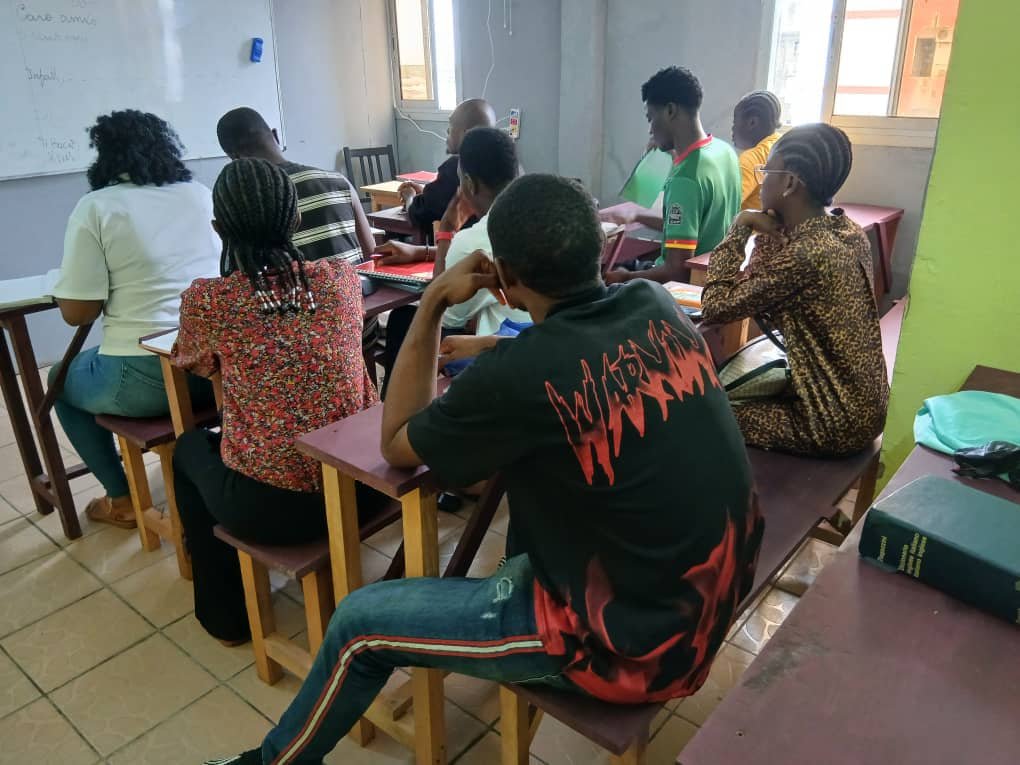
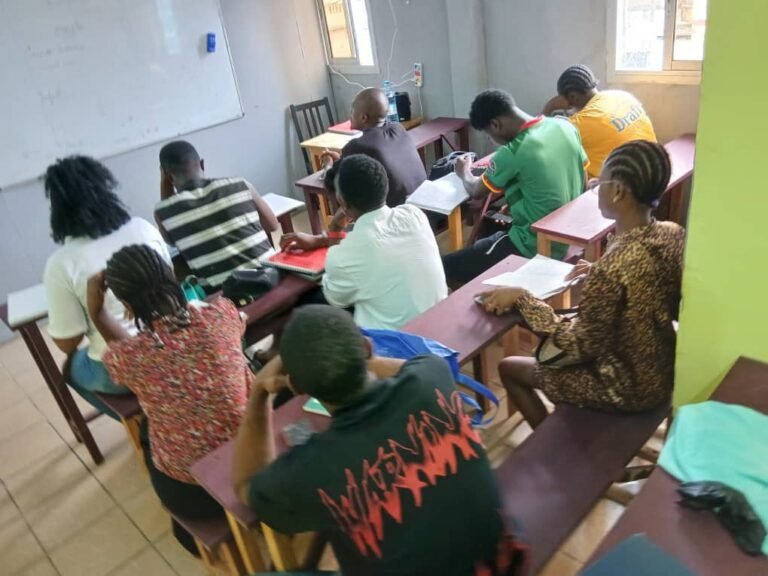
IELTS is the most widely required English exam in study and immigration applications to Canada, the United Kingdom and Australia. It is also the one where the gap between real ability and the score obtained is widest, because the test rewards method as much as language. Here is how to prepare for it properly from Douala.
IELTS assesses four skills: Listening, Reading, Writing and Speaking. Each is marked out of 9, and the average gives the overall band score, rounded to the nearest half point.
There is no pass or fail: there is a score, and a requirement specific to each destination. A university may ask for an overall 6.5 with a minimum of 6.0 in each skill — that per-skill minimum is often overlooked, and it is what sends applications back.
Two versions exist. Academic is for candidates applying to higher education. General Training covers immigration, vocational training and work experience. The Listening and Speaking sections are identical; Reading and Writing differ.
Choosing the wrong version is a costly and irreversible mistake for that sitting. Check what your application requires before you register.
Forty questions, four recordings, varied accents (British, Australian, North American). The difficulty is not overall comprehension but locating precise information — figures, names, dates — usually reworded from the question.
What costs marks: spelling. A correct answer spelled wrongly is marked wrong.
Three texts, forty questions, sixty minutes. The trap is time: many candidates read the first text in full and never reach the third. The skill to build is targeted scanning, not linear reading.
Two tasks. The first asks you to describe a chart or a process (Academic) or to write a letter (General). The second is an argumentative essay.
This is usually the weakest skill, because it is marked against precise criteria: task response, coherence, vocabulary, grammar. A long, brilliant text that answers the wrong question scores badly.
A three-part interview with an examiner. Fluency counts for more than grammatical perfection: it is better to speak with a few errors than to keep stopping to correct yourself.
Preparing for IELTS in Douala? PVT Institut runs intensive preparation built around the real format of the test.
Without a starting score you cannot know which skill to work on. Sit a full test under real conditions, timer included. The result will probably be lower than you expect — that is normal, and useful.
If your application sets a per-skill minimum, your lowest mark decides everything. Practising what you are already good at is reassuring but ineffective.
Question types, section order, timing for each: these reflexes come from repeating complete papers, not from isolated exercises.
This is where self-preparation hits its limit. Nobody can assess their own Writing against the official band descriptors. Regular outside feedback is what moves the score.
It depends on the gap between your current level and your target score. Gaining half a band usually takes less effort than a full band, and progress slows as you climb: going from 5.0 to 6.0 is faster than from 7.0 to 8.0.
A one-month intensive track suits a candidate already close to the target who mainly needs to master the format. If the gap is wide, general English has to be consolidated before exam preparation begins.
Depending on the destination, a French test may be more relevant — or complementary. For a Canadian plan in particular, the TCF and the TEF open distinct routes. Our article on choosing a French test sets out the options.
IELTS is prepared on three fronts: language level, knowledge of the format and time management. Start with a mock test, target your weakest skill, get your work marked, and fix the exam date to structure your revision.
PVT Institut prepares candidates for IELTS, TOEFL, TOEIC and TSE in Rails-Bonaberi. To establish your starting level, contact the institute.
PVT Institut teaches English, French, German, Italian and Chinese in Rails-Bonaberi, Douala.
The six HSK levels, the three real difficulties of Mandarin (tones, characters, production) and a level-by-level preparation method.
Read articleTest or diploma, the versions of the TCF and TEF, the role of the DELF and DALF: how to choose the French exam your application actually requires.
Read articleThe real differences between the Goethe-Zertifikat, TELC, ÖSD and TestDaF, and how to choose the certification that matches your application rather than your preference.
Read article